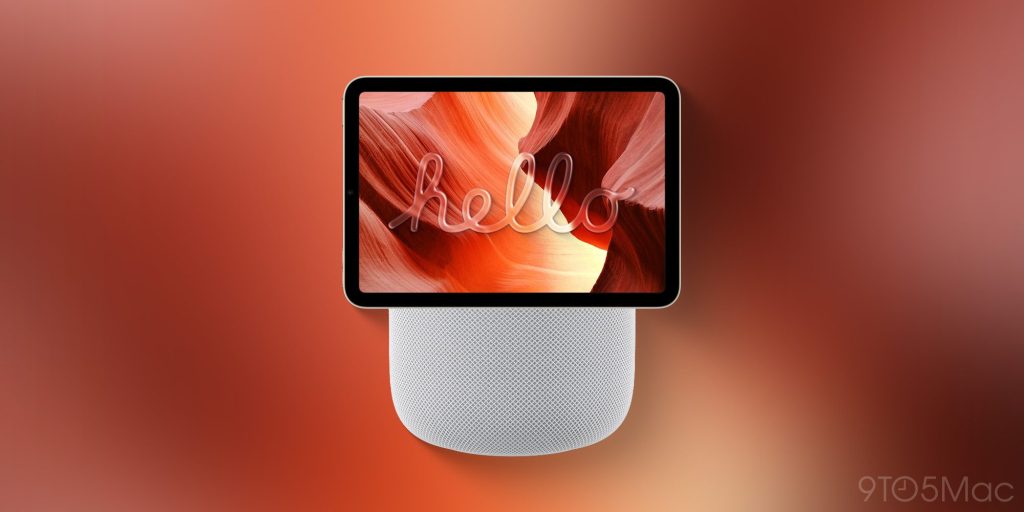

My colleague Ryan last week expressed concern that Apple’s upcoming HomePod Touch device might be making the same mistake as the original speaker.
But while I do suspect it may be something of a slow burn, I think the device will eventually achieve a much larger market even at the same price …
Ryan’s concern was that a recent Bloomberg report suggested Apple is targeting the same $350 price for the new device.
The original HomePod
That’s an understandable concern given the history. While Apple has never released any sales figures, it’s widely considered that the original HomePod failed to achieve the traction the company had hoped.
I argued some years ago that this is because the product was misunderstood by most Apple customers.
It was mostly only the audio media that reported it for what it was: an incredible amount of speaker for the money. Add in the ability to stereo-pair two of them, and to create high-quality multi-room audio at a price never seen before, and it really was a phenomenally impressive product.
The problem for Apple is that demand for impressive speaker systems is way smaller than for its other products. It is this, rather than the product being overpriced, that was responsible for its relative failure.
The HomePod Touch
I do expect the HomePod touch to be a slow burn, but that’s less about the price and more about the fact that it only makes sense as a smart home controller – and then only for some smart homes.
If you don’t currently have any smart home devices, or only have a few smart bulbs, then the product really doesn’t make much sense.
At the other end of the scale, if you have an extensive smart home and were an early adopter of the technology, then you may be equally uninterested. That’s me, and my own use of smart home tech is almost exclusively Siri controlled – ironically, perhaps mostly using the network of original HomePods I have around my home, though that wasn’t the reason I bought them.
Where I see demand for the HomePod Touch is mass market consumers who have started to get into smart home tech and aren’t really comfortable controlling everything by voice. I know from my own experience of less techie friends visiting my home that a visual panel makes more sense to them. This is the reason I actually ended up repurposing an old iPad as a dedicated smart home control panel.
Part of the reason for this, I think, is simply that relying on voice control requires you to remember the names of all your devices and scenes, and that’s much easier to do if you were the person who created those names. It’s harder for other family members, even if you tried to be as logical and consistent as possible.
Even if you are going to use a visual control panel, I would say techies are perfectly comfortable opening the Home app on their iPhone. But it surprised me how many non-techie friends considered that too complicated but responded well to an always-visible control panel on the wall.
That’s why I think HomePod Touch will, in time, become a successful product – and I don’t think a $350 price point would put people off once they start to experience all of the benefits of a smart home.
What’s your view? Do you think a $350 HomePod Touch would be a flop, or do you think it will succeed over time? Please share your thoughts in the comments.
Highlighted accessories
- Official Apple Store on Amazon
- Apple 40W Dynamic Power Adapter for iPhone 17
- Official Apple iPhone Air cases and bumpers
- iPhone Air MagSafe Battery
- Official iPhone Air case
- Official iPhone 17 cases
- Official iPhone 17 Pro cases and Pro Max cases
